Menu Close
The Hungry Season Book Cover

The Hungry Season
A Journey of War, Love, and Survival

The Hungry Season
A Journey of War, Love, and Survival

Little, Brown and Company, September 2023

The Hungry Season is being translated and released as a free Hmong-language audiobook. Click here to learn more, including how to support this groundbreaking work.

*Best Nonfiction of 2023* Kirkus Reviews

*Editors’ Choice* New York Times Book Review

Finalist for the California Book Award, the Plutarch Award for Biography, and the William Saroyan International Prize.

In the tradition of Katherine Boo and Tracy Kidder, a deeply reported drama ranging from the mist-covered mountains of Laos to the sunbaked flatlands of Fresno, California, tracing one woman’s quest to overcome the wounds inflicted by war and family alike​.

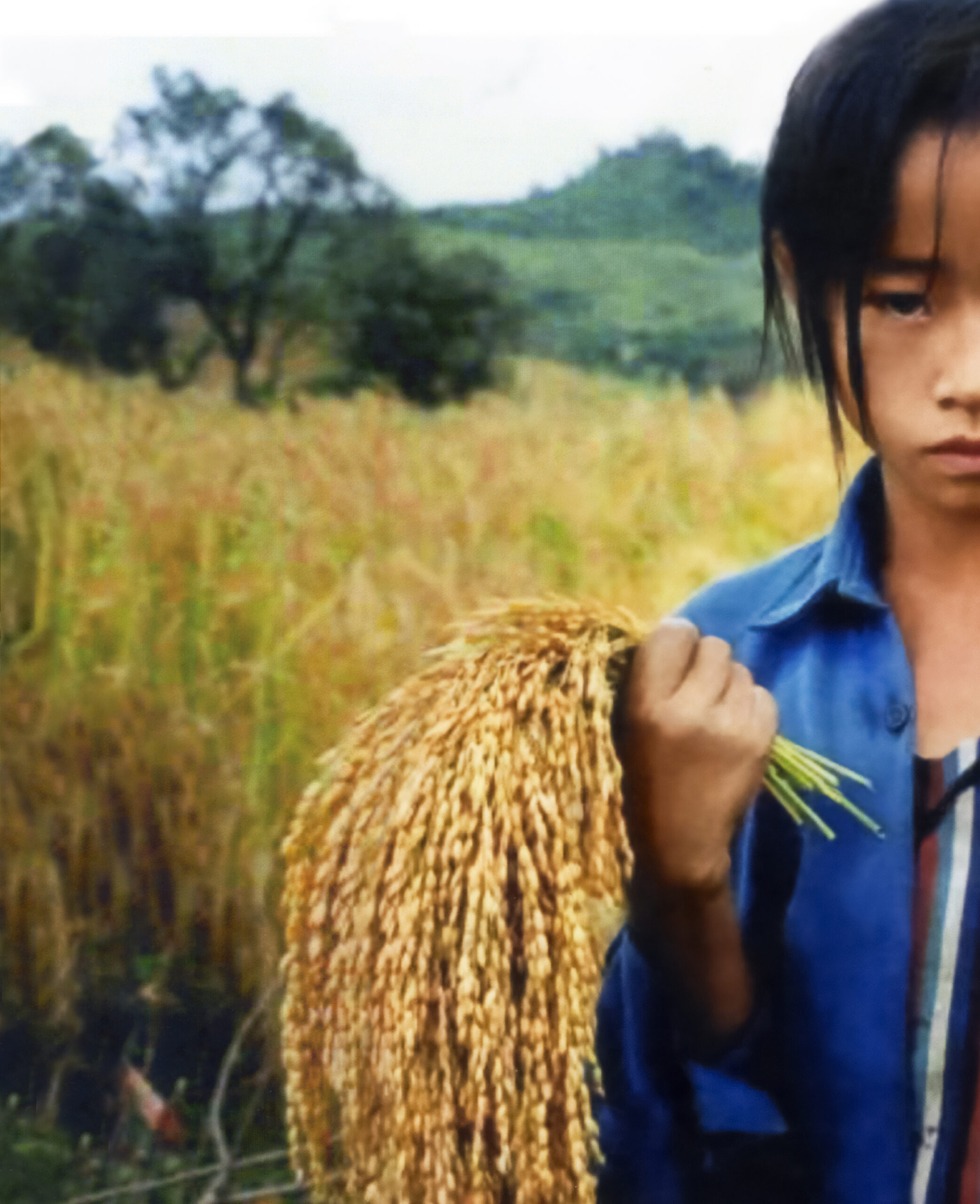
As combat rages across the lush highlands of Vietnam and Laos, a child is born. Ia Moua enters life at the bottom of her world’s social order, both because she is part of Laos’s Hmong minority and because she is female. But when brutal communist rule upends her life and strips Ia of all she loves, this young girl resolves to chart her own defiant path. With ceaseless ambition and an indestructible spirit, Ia builds a new life for herself and, before long, for her children, first in the refugee camps of Thailand and then in the industrial heartland of California’s San Joaquin Valley. At the root of her success is a simple act: growing rice just as her ancestors did. When she gains power and independence, however, Ia must confront all that she left behind—and find a place in her heart for those who left her.

Meticulously reported over seven years and written with the intimacy of a novel, The Hungry Season is an unforgettable tale about hard-won survival and the nourishment that matters most.

Praise for
The Hungry Season

“Lyrical… Hamilton is a master observer, as attentive to Ia’s world as Ia is to her seedlings.”

“A radiant work of compelling portraiture… Hamilton spent hundreds of hours with her subject, and the result is a brilliant narrative that blends an intimate story into the larger cultural, political, and agricultural history of Laos and the Hmong people. Comparisons to Katherine Boo’s Behind the Beautiful Forevers are certainly apt, and book clubs will quickly embrace the stark humanity in this unforgettable title.”

“Sensitive and carefully written… A deeply reported story of aspiration and desperation among an immigrant Hmong community in California’s Central Valley.”

“[An] intimate work of narrative nonfiction…”

“I can’t recall any telling of the refugee’s story with so much depth, texture, and heart. Lisa M. Hamilton is a devoted, inspiring listener and The Hungry Season shines with empathy. I loved this book.”

Ted Conover, National Book Critics Circle Award–winning author of Newjack: Guarding Sing Sing and Cheap Land Colorado

The Hungry Season is a deeply reported and intricately narrated story of displacement, homelessness, and identity. Hamilton crafts an intimate, searing portrait of one marginalized woman, devastated by politics and poverty, patriarchy and tradition, wars and colonialism, and the resilient way she finds solace and strength in one thing that brings her home: rice.”

Suki Kim, New York Times bestselling author of Without You, There Is No Us and The Interpreter

The Hungry Season reads like a novel while giving the reader an eyewitness account of Laos’s history and a vivid portrayal of one remarkable life. Ia Moua’s incredible tale of survival puts our daily problems in perspective and reminds us of the resilience of the human spirit and the power of defining our own paths. A must-read.”

Le Ly Hayslip, author of When Heaven and Earth Changed Places and Child of War, Woman of Peace

“Hamilton writes with precision and grace about displacement, family ties, and how the human connection to land—and what grows there—can serve as a lifeline. This is a tremendously reported story about a tremendous life.”

Lauren Markham, author of The Faraway Brothers

The Hungry Season is a rare feat of reportage. Hamilton devotes herself so completely to learning the story of Ia Moua that there seems to be no barrier between writer and subject—the two voices have fused. The result is transcendent. It does not happen often, that the best of nonfiction reads like the best of fiction. This is that sublime book.”

Mark Arax, bestselling author of The Dreamt Land and The King of California

Translating The Hungry Season

When making your tax-deductible contribution through our fiscal sponsor, please make sure to direct your support to this project by writing “The Hungry Season” after your name in the donation form. Or, send us an email through the contact form here. Otherwise, the money will not reach us. Thank you! 

From the start, reporting and writing this book posed a challenge: I do not speak Hmong, and Ia does not speak English. The five years that I spent in the field with Ia, which included more than 300 hours of interviews, were all conducted with the help of a professional interpreter. 

Since the book was published, I have been gratified by its reception. Still, there is a gaping hole in the book’s success: neither Ia nor the vast majority of older Hmong Americans can read it. This population largely speaks limited English, and mostly does not read in any language. For them to access this story of their community—indeed, for Ia Moua to hear her own biography—it became clear that The Hungry Season had to be translated into Hmong and recorded as an audiobook. I vowed to Ia that I would find a way.

This proved to be no small feat. To my knowledge, the Bible is the only full-length work of literature that has been translated from English to Hmong; no book of journalism ever has. One of the many reasons the process was so challenging was that going from English to Hmong requires more than exchanging one word for another; it demands that you take one way of expressing life through words and reshape that to fit into a whole other approach to language, rooted in a fundamentally different experience of the world. 

I was honored to find partners in several dedicated experts: Bee Vang-Moua, director of the Hmong language program at University of Minnesota, worked tirelessly to translate the book. Kazoua Yang, one of the foremost interpreters in the country, edited the translation. Today, Bee Vang-Moua is recording the audiobook under the direction of Hlee Lee-Kron, of The Other Media Group. Later this year, the non-profit MN Zej Zog will publish the Hmong translation in print and ebook forms. Our collective hope is that the book in all its configurations—two languages, three formats—will offer a dynamic learning tool for the growing number of Hmong-focused classrooms around the country. 

To my mind, it’s all a matter of basic language justice. Making this book available in the language of its protagonist creates the space for Ia and her community to be part of the conversation about it. Furthermore, bringing this story to a variety of platforms has the potential to spark a whole new dialog within the community itself. Lor Xiong, the Hmong American interpreter who partnered with me in reporting, has told me that over time she has heard many Hmong men tell their stories of the past, but never a woman, not even her own mother. Ia’s biography will offer the community a unique perspective across generations and, with luck, inspire other Hmong women to share their histories.

Sadly, none of this falls within the financial calculus of the American publishing industry. In order to access, engage with, and amplify the voices of those who speak another language, most writers must seek supplementary funding to enable them to work across languages. It follows that American authors—often already stretched for time and money—rarely report deeply about non-English speakers. The obvious consequence is that these people’s stories aren’t widely told; in effect, they are left out of the dominant conversation.

Our journey to create Hmong-language versions of The Hungry Season has been supported by a number of foundations and individuals. While their contributions have been generous, we have not yet raised enough money to cover the production expenses of translation, editing and recording. If you value this work, please use the button at the top of this section to make a tax-deductible donation through our fiscal sponsor, The Food & Environment Reporting Network. As noted above, please write “The Hungry Season” after your name in the donation form to make sure your contribution reaches this project. Thank you!

Events

Book Signing
March 31, 2023, 7:00 pm
Booksmith, San Francisco
Learn More >>

Book Signing
March 31, 2023, 7:00 pm
Booksmith, San Francisco
Learn More >>

Book Signing
March 31, 2023, 7:00 pm
Booksmith, San Francisco
Learn More >>

Book Signing
March 31, 2023, 7:00 pm
Booksmith, San Francisco
Learn More >>